

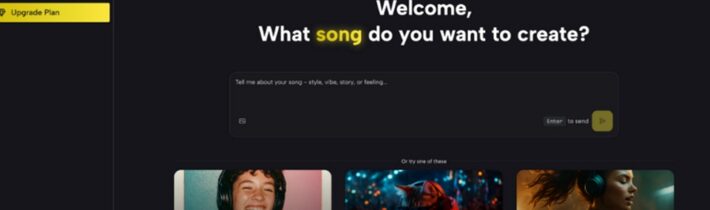
Most non-musicians do not start with a tempo, key signature, or arrangement map. They start with a scene, a classroom goal, a launch video, or a mood they can feel but cannot yet describe in musical language, which is where an ai song agent can be useful as a bridge between intent and composition.
The practical control point is not the final generation button. It is the moment before that, when a plain-language brief becomes a reviewable musical blueprint and the creator can check whether the proposed structure, instruments, tempo, and style actually match the job.
Why The Brief Matters Before Any Track Exists
For a founder, educator, or video editor, the hard part is often not having an idea. It is converting that idea into instructions a music system can use without requiring years of vocabulary around genre, harmony, or production.
songagent is positioned around a conversational flow: describe the musical vision, review a blueprint, generate, then refine through follow-up requests. That matters because it gives a non-musician a middle step between “make this feel inspiring” and accepting whatever audio arrives.
- Use Case Comes Before Genre Selection
The first useful question is not “what genre should this be?” It is “what job does the music need to do?” A lesson recap, a product teaser, and a nonprofit fundraising clip may all need warmth, but they do not need the same pacing or density.
For example, an educator might need a simple tune that helps students remember a sequence. A brand team might need a short identity cue for a coffee-shop campaign. A video editor might need a bed that supports narration without fighting it.
Audience Context Keeps The Prompt Grounded
The audience changes the brief. Music for children may need clearer repetition, while a founder’s pitch video may need restraint so the voiceover stays central. Naming that context helps the blueprint become a practical checkpoint rather than a decorative description.
- Emotional Arc Gives Direction Without Jargon
Non-musicians often say “uplifting,” “calm,” or “tense,” then get stuck. A stronger brief explains how that emotion should move across the piece: gentle at the start, brighter in the middle, resolved at the end.
That arc is easier to judge in a blueprint than in a finished file. If the proposed structure looks flat, the creator can ask for more lift in the chorus, a softer opening, or a more confident ending before committing to a full result.
How SongAgent Works As A Control Checkpoint
The public workflow for SongAgent puts the brief first, then shows a musical blueprint before generation. From a practical user perspective, that sequence is the feature that helps non-musicians stay involved instead of handing the entire decision to a black box.
- Step One Describe The Creative Job Clearly
Start with the intended use, audience, mood, vocals, and any obvious style boundaries. A founder might ask for a concise product-video track with a confident but not aggressive tone; an educator might describe a memorable song for a science concept.
Plain Language Can Still Be Specific
Specific does not mean technical. “Soft piano under narration, then a warmer chorus” is more actionable than “make it professional,” even if the creator cannot name a key, chord progression, or production style.
- Step Two Inspect The Musical Blueprint Carefully
The blueprint is where songagent appears most useful for this audience because it can surface structure, instrumentation, key signature, tempo, and style elements before the song is generated. That gives the creator something to approve, question, or redirect.
If the tempo feels too fast for a tutorial, say so. If the instrumentation looks too busy for a voiceover, ask for fewer layers. If the structure does not leave room for a product reveal or classroom call-and-response, revise the brief before moving forward.
- Step Three Refine With Concrete Revision Language
Revision language works best when it points to a musical moment or function. Instead of “make it better,” a creator can ask for a more energetic chorus, a gentler opening, added strings in the bridge, or a shorter version for a social clip.
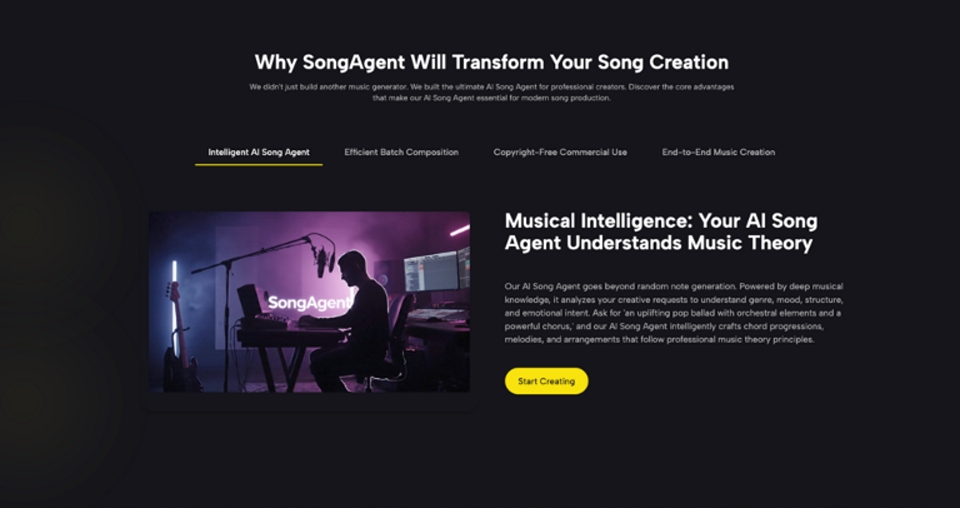
This is also where an ai music agent is most approachable for people who know outcomes better than terminology. The conversation can stay anchored in use case, emotion, and structure while the system handles more of the music-theory translation.
- Step Four Export Or Request Useful Variants
After generation and refinement, the site-described flow includes downloading in formats such as MP3 or WAV and requesting versions like an instrumental or shorter edit. Paid plan details also list vocal separation and up to 10 stems, which may matter for creators who need more post-production flexibility.
For a simple classroom song or brand sketch, a finished download may be enough. For a video editor, an instrumental or shorter variation may be more useful than a single full-length track.
The Brief-To-Blueprint Method For Non-Musicians
The method is simple: define the job, describe the emotional movement, set a few boundaries, then use the blueprint as a reality check. It keeps the creator from treating prompting as magic wording and turns it into a practical review process.
Genre boundaries are especially helpful when the creator is unsure. “Cinematic but not trailer-heavy,” “pop-adjacent but not club-focused,” or “folk warmth without sounding rustic” gives the system a lane while leaving room for composition.
Instrumentation is another control lever. A creator may not know arrangement theory, but they can still decide whether piano, guitar, synth pads, drums, strings, or vocals belong in the project. Those choices shape how the music sits under a lesson, product clip, or brand message.
Structure is the final checkpoint. Intro, verse, chorus, bridge, outro, and short edits are not just music terms; they are timing tools. A launch video may need a rise near the reveal, while an educational song may need repeated hooks that make recall easier.
Honest Limitations For Blueprint-Led Music Creation
The honest limitation is that results still depend on the clarity of the brief and the creator’s ability to judge the blueprint. SongAgent can help translate plain-language intent into musical structure, but it does not remove the need to decide whether the proposed tempo, instruments, and emotional arc fit the project.
There is also a practical caveat around claims that matter commercially. The public pages describe royalty-free and commercial-use positioning, while plan language should be checked when the intended use is client work, advertising, or monetized distribution.
When This Method Fits The Creator Best
This approach fits creators who know the communication goal more clearly than the music vocabulary. A founder can describe the feeling of a product launch, an educator can describe the learning outcome, and a video editor can describe how the music should support pacing and narration.
SongAgent is strongest in this framing when it is treated as a briefing partner, not just a generation button. The blueprint gives non-musicians a practical place to pause, inspect, and revise before the track becomes something they have to work around.